
Defense & Aerospace
See first. Respond faster.
In defense and aerospace, every millisecond counts.
Prophesee combines event-based sensing, real-time processing and application intelligence to deliver fast, resilient perception of low-signature objects across ground, airborne and space missions – all within strict size, weight and power, compute and bandwidth limits.
Trusted by industry leaders











Performance built for mission-critical systems
Detect and respond sooner
1 ms
sensor latency
Maintain perception in extreme lighting
>120 dB
dynamic range
Enable always-on perception with ultra-low power
<2 mW
sensing power
Deploy where size and weight are critical
4 × 5 mm · 0.13 g
sensor package
Defense & aerospace applications
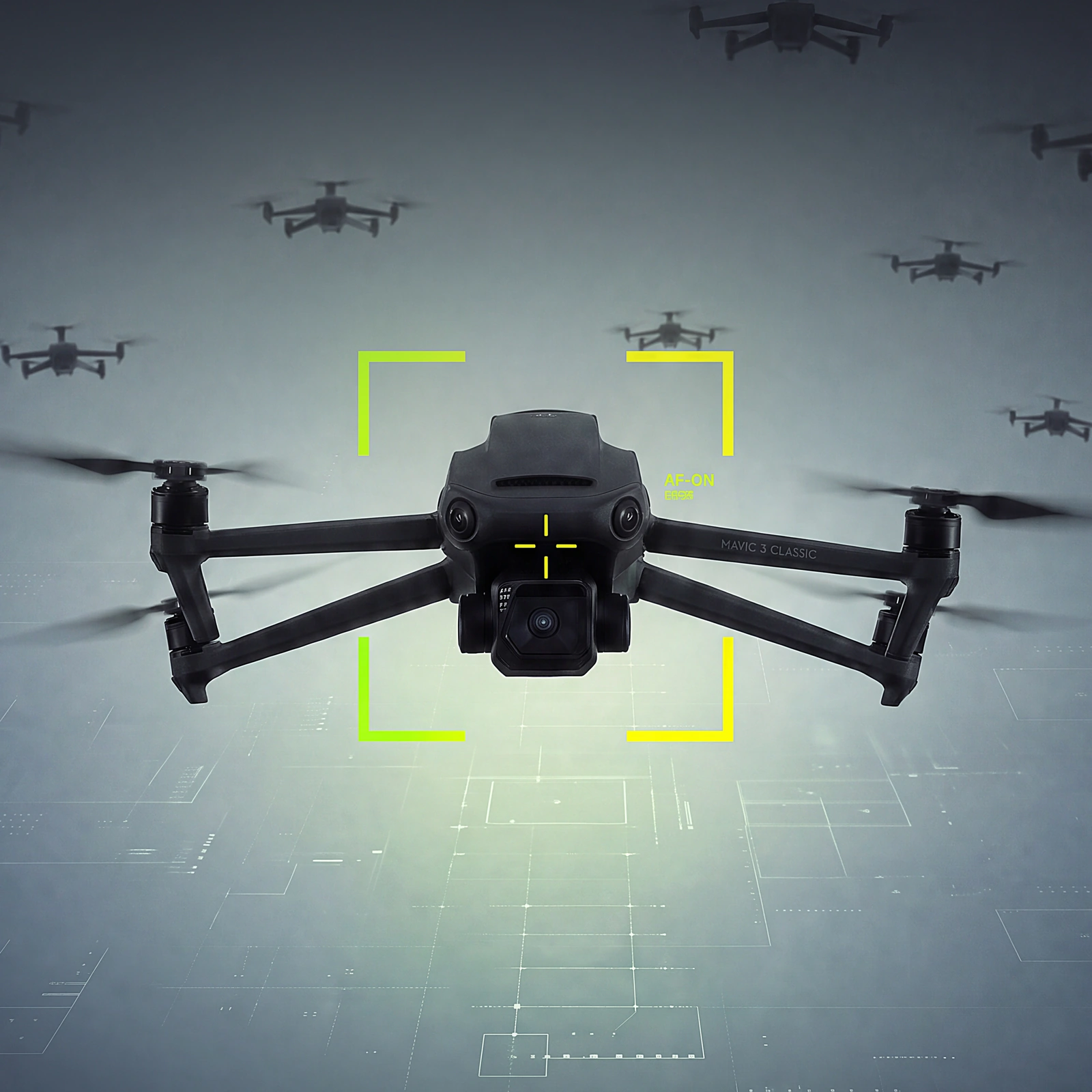
Counter-UAS & drone detection
Detect and track small, fast and unpredictable drones in time to act
Small drones can fly low, change direction rapidly and present increasingly limited acoustic, thermal or electromagnetic signatures. Against cluttered backgrounds or difficult lighting, conventional visual systems struggle to maintain timely and reliable detection.
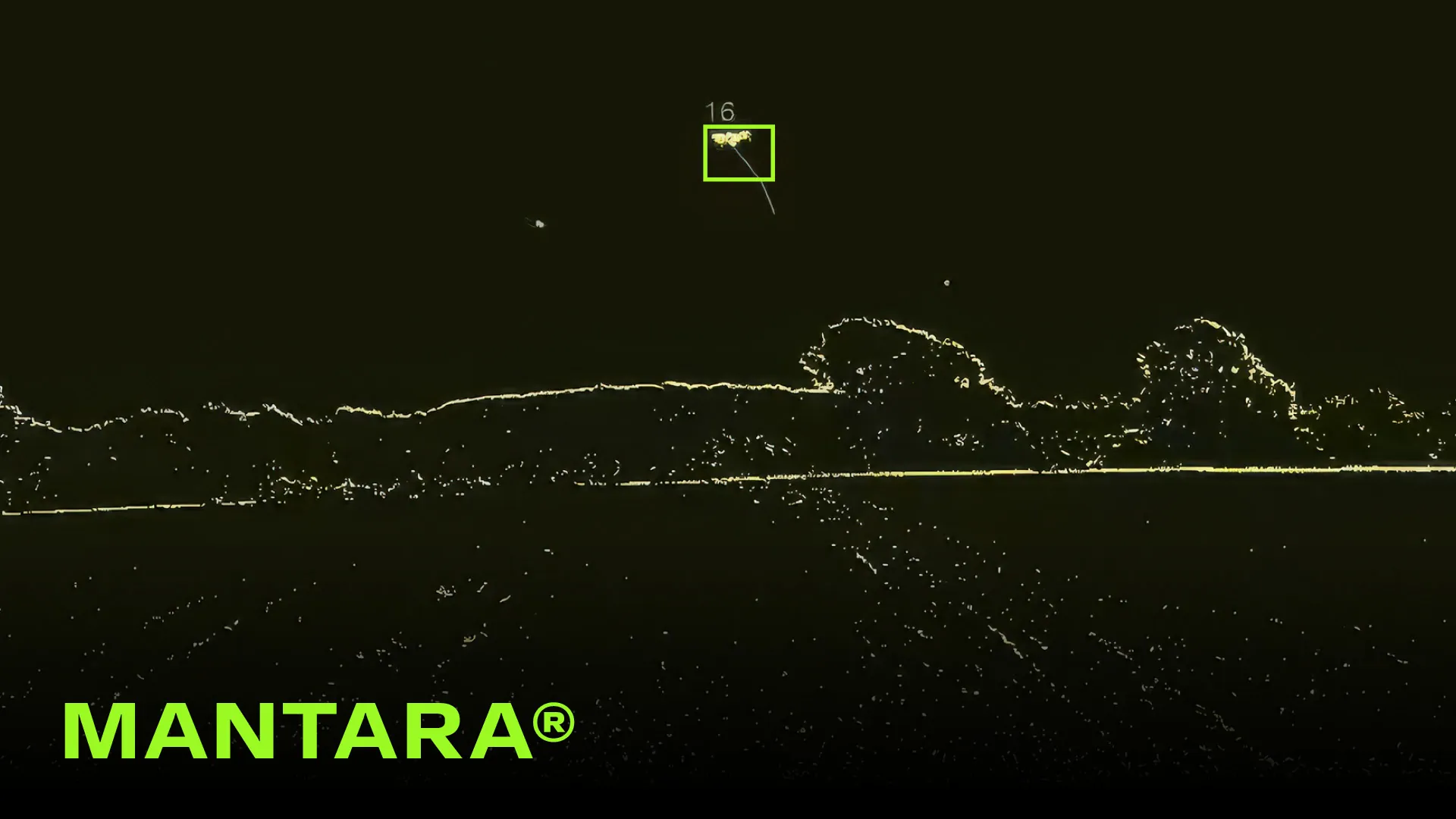
Event-Based Vision captures motion at the pixel level as it happens, providing sparse, low-latency information for detecting and tracking high-speed airborne targets.
Prophesee’s Mantara® brings these capabilities into a complete, field-validated drone detection and tracking system powered by Hearth®, designed for integration into broader counter-UAS systems.
Airborne self-protection
Bring responsive perception onto constrained airborne platforms
Airborne systems need to detect approaching objects and interpret rapidly changing surroundings while operating within demanding size, weight, power and compute limits.
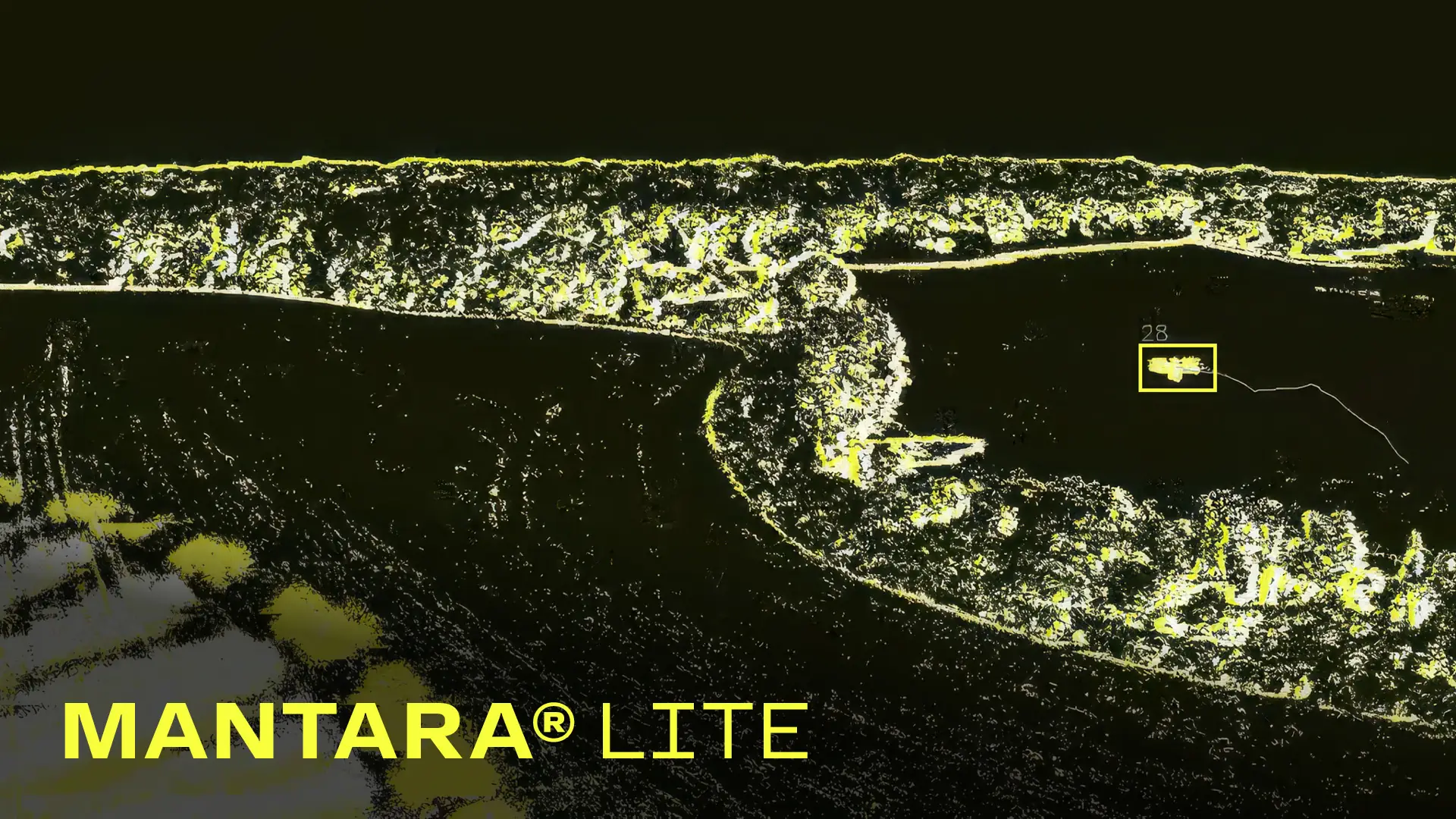
The low latency, sparse output and compact footprint of Prophesee’s Event-Based Vision make it well suited to embedded airborne perception, including drone-to-drone detection, tracking and guidance.
Mantara Lite extends Prophesee’s Event-Based Vision capabilities to compact airborne and embedded defense platforms.
Object detection & recognition
Identify low-signature objects sooner in complex scenes
Low light, camouflage and visual clutter can delay the detection of personnel, drones and other objects. Event-Based Vision captures fine temporal changes with low latency and high dynamic range, providing motion-rich data for AI-based detection and recognition.
In a challenging camouflaged-personnel demonstration, FlySight reduced time to first detection from 12 to 2 seconds using Prophesee sensing.
Space situational awareness & navigation
Track objects and determine orientation across extreme conditions
Space systems must detect distant or low-signature objects, maintain perception across extreme differences in brightness and operate within strict power, processing and bandwidth constraints.
Prophesee’s Event-Based Vision combines high dynamic range, precise temporal information and sparse output to support satellite and debris tracking, space-based observation and high-frequency star tracking for spacecraft attitude determination.
Prophesee sensing has been demonstrated through the Astrosite Mobile Neuromorphic Observatory, the Falcon ODIN space experiment and Kitware’s event-based star-tracking project.
Laser and pulse detection
Detect short-duration optical events with precise timing
Asynchronous sensing allows systems to detect, localize and decode rapid optical events without waiting for a complete image to be captured.
Prophesee’s Event-Based Vision has been demonstrated for the simultaneous detection and identification of multiple laser pulses by Thales, including infrared signals and applications aligned with STANAG 3733 requirements.
GPS-denied navigation

Current GPS systems are vulnerable to interference from large buildings, dense foliage, extreme weather or signal jamming. Event-Based Vision outputs a real-time terrain fingerprint for the particular patch of land the vehicle is passing over. This is then compared against a database of terrain fingerprints generated from satellite imagery, which is stored on the vehicle.
Developing a civil or industrial drone, robot or autonomous vehicle?
Strengthen perception through multimodal sensing
Event-Based Vision can operate independently or complement RGB, infrared, polarization and other sensing modalities.
By contributing precise motion and temporal information, event data can strengthen object detection and recognition while allowing each modality to address the part of the scene it captures best. This enables more responsive multimodal systems without relying on one sensing approach alone.
| Technology | Detection method | Advantages | Limitations |
|---|---|---|---|
| Radio frequency (RF) analysis | Detects communication signals between drone and controller | Effective for remote-controlled drones | Ineffective for autonomous drones; can be jammed or spoofed |
| Radar | Emits radio waves and detects reflections | Works in various weather conditions; detects moving objects | Struggles with small drones; hard to differentiate from birds |
| Acoustic sensors | Detects sound signatures of drone propellers | Works in low visibility conditions | Short range; ineffective in noisy environments |
| Optical (RGB) cameras | Visually detects drones using image recognition | Can provide high-resolution images | Struggles with cluttered backgrounds; low performance in poor lighting |
| Thermal imaging cameras | Detects drones based on heat signatures | Effective at night or in low-visibility conditions | Expensive; bulky if using cooled sensors; reduced effectiveness in high ambient temperatures |
| Event-Based Vision (bio-inspired neuromorphic cameras) | Detects temporal visual signatures of drones (e.g. propeller rotation) independently of background clutter | Ultra-fast response time (microsecond range); high dynamic range (>120 dB); robust operation under varying / adverse lighting conditions; low data redundancy; stronger static drone detection | HD is the highest resolution available to date |
Multimodal drone detection

This project evaluated pooling-based, asymmetric modality injection and symmetric fusion. Event-based models outperformed RGB-only models alone, while combining both modalities further improved performance. Learn more
Cambrian multimodal sensing platform
Cambrian combines visual, polarization and event data through a single aperture, with real-time fusion at the edge. Learn more
Infrared / Event-based drone detection

SAAZ explores infrared and event-based sensing for drone detection and other demanding imaging applications in the deep tech space. Learn more
From sensing to deployable systems
Prophesee brings together sensing, embedded software and application intelligence to support defense and aerospace projects from technology integration to complete mission-focused systems.
Mantara®
A complete, field-validated ground-based counter-UAS system for detecting and tracking small, fast-moving drones.
Mantara Lite
Compact, lightweight Mantara configuration for drone-to-drone detection, tracking and guidance in size, weight and power constrained airborne defense applications.
Hearth®
The next-generation event-based vision software and intelligence layer behind Prophesee’s complete systems. Hearth supports event-based sensing, embedded processing, optimized algorithms and the management of applications across deployed systems.
Bring Event-Based Vision into your defense or aerospace system
Prophesee experts can help assess your mission requirements and define the right combination of sensing, software, application intelligence and integration support.