
Scientific Imaging & Research
Observe and measure fast, transient phenomena
Resolve fluorescence events, particle motion and rapid flow with microsecond-scale temporal precision and sparse, time-stamped data.
Explore published research and experimental systems using Prophesee Event-Based Vision across microscopy, microfluidics, biomedical research and fluid measurement.
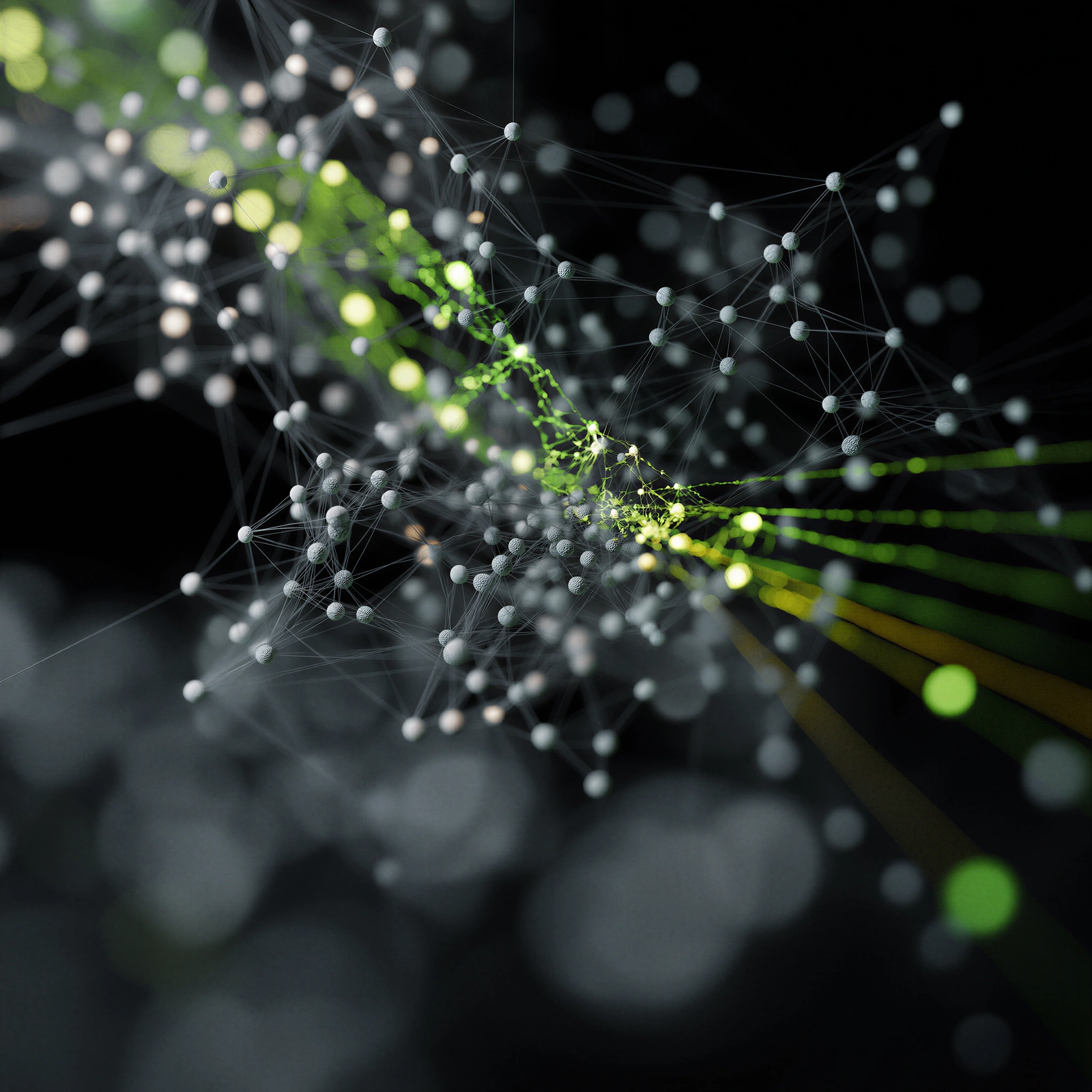
Event-Based Vision for scientific measurement
Resolve rapid transitions, motion and transient events
Microsecond-scale
temporal precision
Observe relevant change across bright and dark regions
>120 dB
dynamic range
Support real-time measurement and experimental feedback
<1 ms
latency
Record relevant visual changes without repeated full frames
Sparse output
change-driven data
Representative performance across selected Prophesee Event-Based Vision technologies. Actual performance depends on the selected technology, configuration and experimental conditions.
Featured studies
Single-molecule localization microscopy




Event-based sensing records fluorescence blinking as precisely time-stamped events, allowing individual emitters to be localized without acquiring a continuous sequence of complete frames.
The published Eve-SMLM method demonstrated super-resolution fluorescence imaging with improved acquisition speed under high-density blinking conditions, where overlapping emitters can challenge conventional frame-based methods.
≈25 nm
Reconstructed spatial resolution
10× faster
Acquisition versus frame-based cameras
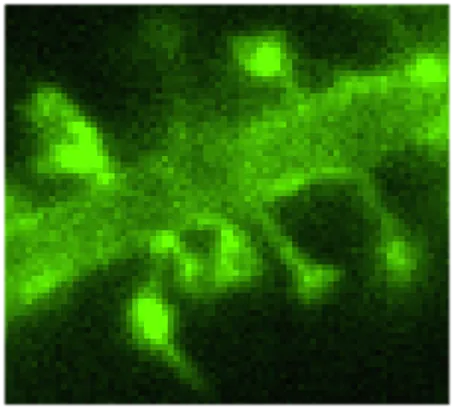
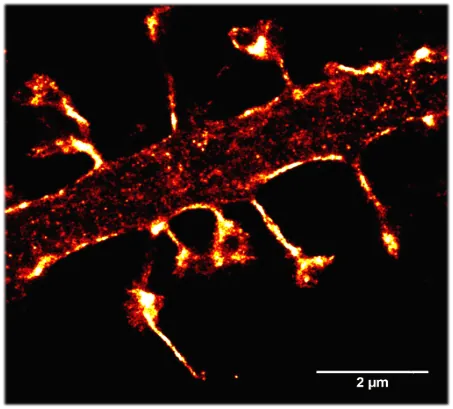
Conventional fluorescence image (≈250 nm) compared with single-molecule localization (≈25 nm). Izeddin et al., PLoS One 2011.
Related research areas
- Single-molecule localization microscopy
- Fluorescence microscopy
- Super-resolution imaging
- Molecular localization
- Biological imaging
Microfluidics and particle analysis

Precisely time-stamped event data enables particles to be detected, tracked and measured as they move through microchannels at high velocity.
Researchers from the Universities of Glasgow, Heriot-Watt and Strathclyde applied Event-Based Vision to bright-field and fluorescence observation using a standard microscope-based configuration.
Down to 1 μm
Particle diameter
Up to 1.54 m/s
Measured fluid velocity
Micro-particle tracking in a microfluidic device using an event camera.
Related research areas
- Microfluidics
- Micro-particle tracking
- Micro-PIV
- Particle velocity measurement
- Fluorescence imaging
- Flow analysis
Biomedical research and experimental vision systems
Event-Based Vision is also being investigated for time-resolved biomedical measurement, particle classification and experimental visual-assistance systems.
Label-free imaging flow cytometry

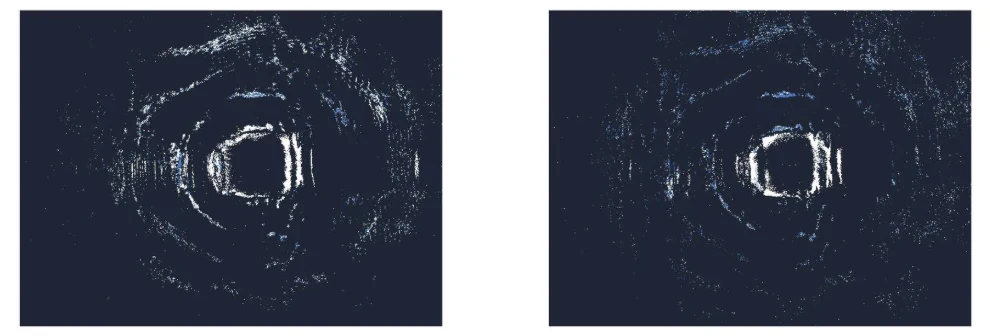
Researchers at Ghent University used event-based imaging to capture the changing diffraction patterns generated by particles moving through a flow-cytometry system.
In the reported experiment, the sparse temporal signatures supported particle classification with lower error and reduced execution time compared with the stated CMOS-based method.
<2%
Classification error*
Sub-millisecond
Processing latency
Related research areas
- Imaging flow cytometry
- Label-free particle classification
- Biological-particle analysis
- Time-resolved imaging
- Inline measurement
Sight restoration through optogenetic stimulation

Prophesee’s event-based sensing was integrated into specialized goggles that captured changes in the visual scene and converted them into light patterns used alongside optogenetic therapy.
The initial single-patient study reported partial recovery of visual function in a participant with late-stage retinitis pigmentosa.
Nature Medicine
Peer-reviewed publication
First case report
Partial recovery of visual function using the combined system
Related research areas
- Optogenetics
- Visual prostheses
- Assistive vision
- Retinal research
- Neuromorphic biomedical systems
Continuous cell and contamination monitoring

Video courtesy of Cambridge Consultants.
Cambridge Consultants developed PureSentry, an experimental system combining event-based imaging and AI models to detect, track and classify cells and microbial contaminants in flowing samples.
The project explores continuous, label-free visual analysis in cell and gene-therapy research and manufacturing environments.
Related research areas
- Cell monitoring
- Microbial contamination detection
- Label-free analysis
- Cell-therapy research
- Continuous biological measurement
Flow visualization and velocimetry

Event-Based Vision captures illuminated tracer particles as continuous, time-stamped trajectories from which evolving velocity fields can be reconstructed.
Researchers at the DLR Institute of Propulsion Technology demonstrated event-based imaging velocimetry across water and air flows, including turbulent conditions and measurements close to surfaces where reflected illumination can complicate frame-based acquisition.
100 mm
Demonstrated field-of-view width
<1 W
Laser power used in the documented setup
Turbulent flow in a water tank reconstructed from captured event data.
Related research areas
- Event-based imaging velocimetry
- Particle image velocimetry
- Particle tracking velocimetry
- Fluid dynamics
- Turbulent flow
- Air and water-flow measurement
Search more published work
Explore more than 300 academic publications featuring Prophesee Event-Based Vision technologies across computer vision, sensing, robotics, machine learning and scientific measurement.
Build on the research
Evaluate Event-Based Vision within your own experimental configuration using hardware, software and technical resources from Prophesee.
Embra HD
An Event-Based Vision exploration kit featuring a compact, industrial-grade USB camera for acquiring event data, evaluating experimental configurations and prototyping.
Hearth®
Prophesee’s intelligence and software platform for developing, integrating and deploying Event-Based Vision processing and applications.
Developer resources
Access documentation, code examples and technical guidance for camera configuration, event-data acquisition and processing.
Inventors Community
Discover experimental projects developed by researchers, engineers and inventors using Prophesee technology.