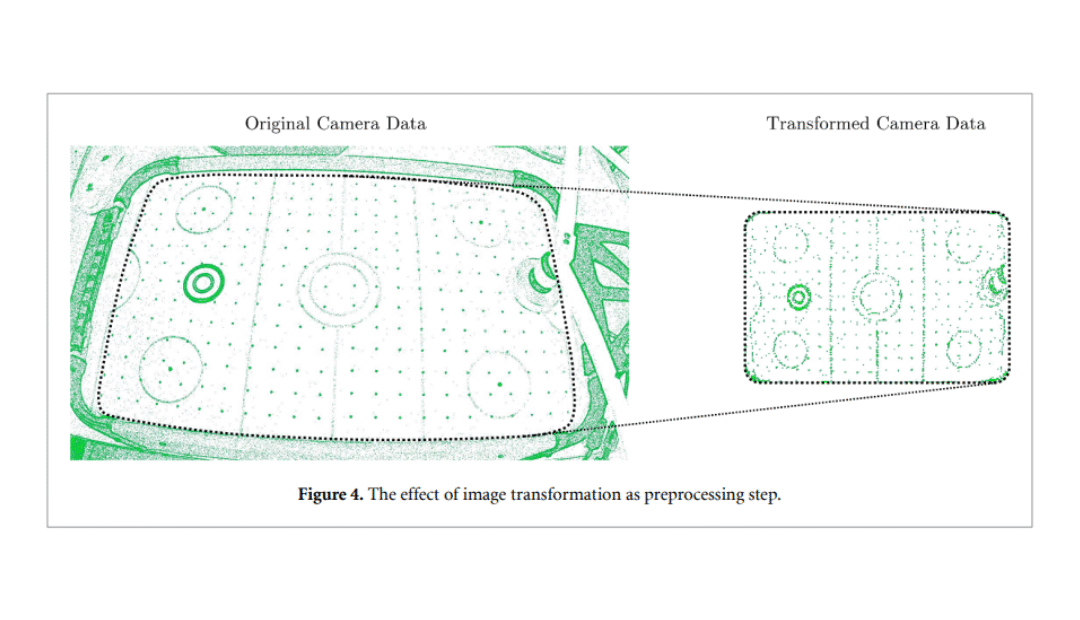
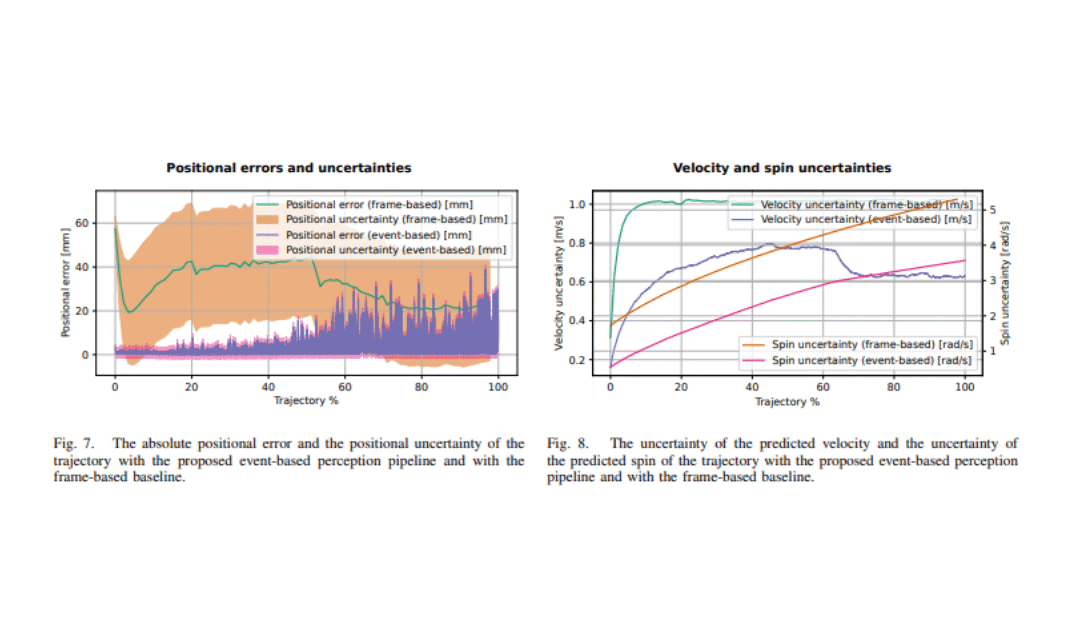
This paper focuses on using spiking neural networks (SNNs) to control a robotic manipulator in an air-hockey game. The system processes data from an event-based camera, tracking the puck’s movements and responding to a human player in real time. It demonstrates the potential of SNNs to perform fast, low-power, real-time tasks on massively parallel hardware. The air-hockey platform offers a versatile testbed for evaluating neuromorphic systems and exploring advanced algorithms, including trajectory prediction and adaptive learning, to enhance real-time decision-making and control.
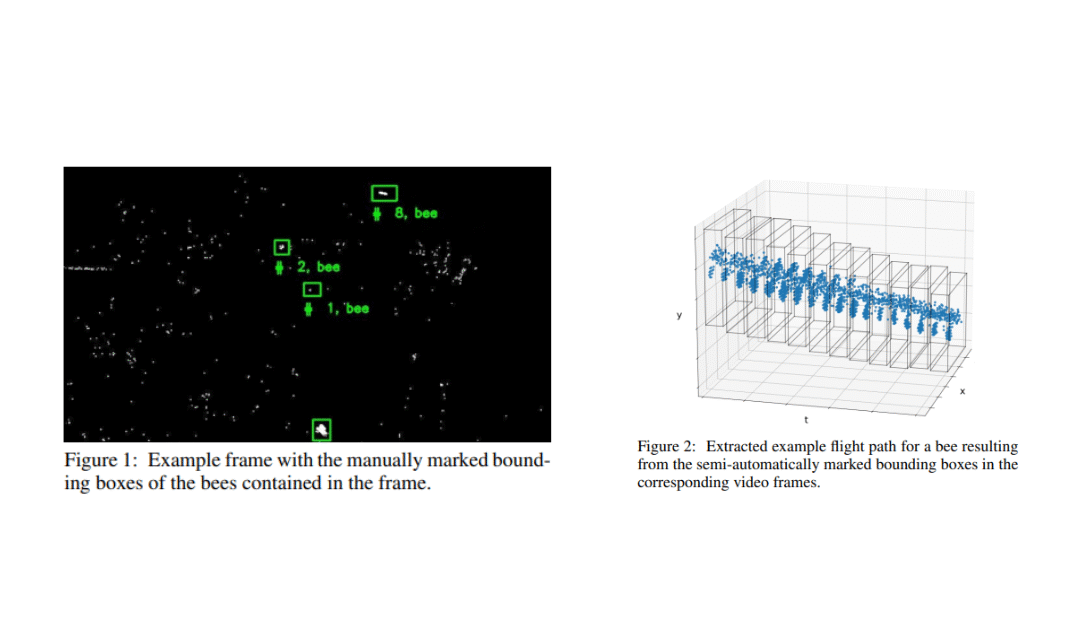
In this paper, the focus is on classifying insect trajectories recorded with a stereo event-camera setup. The steps to generate a labeled dataset of trajectory segments are presented, along with methods for propagating labels to unlabelled trajectories. Features are extracted using FoldingNet and PointNet++ on trajectory point clouds, with dimensionality reduction via t-SNE. PointNet++ features form clusters corresponding to insect groups, achieving 90.7% classification accuracy across five groups. Algorithms for estimating insect speed and size are also developed as additional features.
Event-based sensors are redefining machine vision by mimicking the human eye. Rather than capturing full frames at fixed intervals, each pixel reacts independently, sending data only when brightness changes or motion occurs. This means devices capture only what truly matters, significantly reducing data and energy load while improving speed and dynamic range. From drones to AR wearables or medical robots, these neuromorphic sensors enable smarter, more efficient edge-device vision.
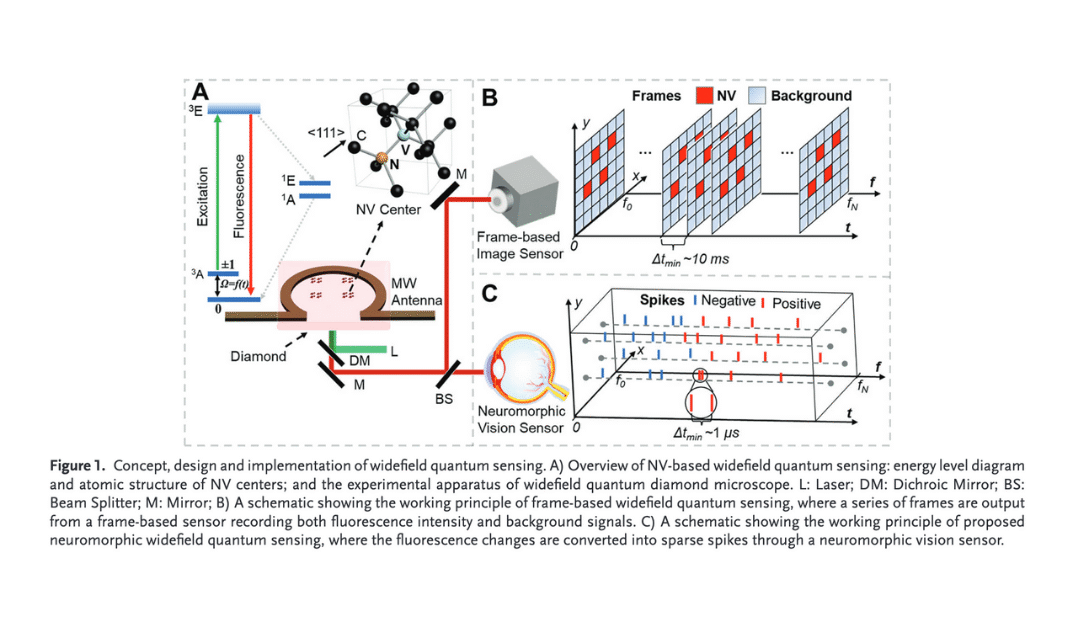
In this paper, a neuromorphic vision sensor encodes fluorescence changes in diamonds into spikes for optically detected magnetic resonance. This enables reduced data volume and latency, wide dynamic range, high temporal resolution, and excellent signal-to-background ratio, improving widefield quantum sensing performance. Experiments with an off-the-shelf event camera demonstrate significant temporal resolution gains while maintaining precision comparable to specialized frame-based approaches, and the technology successfully monitors dynamically modulated laser heating of gold nanoparticles, providing new insights for high-precision, low-latency widefield quantum sensing.
In this paper, the contact-free reconstruction of an individual’s cardiac pulse signal from time event recording of the face is investigated using a supervised convolutional neural network (CNN) model. An end-to-end model is trained to extract the cardiac signal from a two-dimensional representation of the event stream, with model performance evaluated based on the accuracy of the calculated heart rate. Experimental results confirm that physiological cardiac information in the facial region is effectively preserved, and models trained on higher FPS event frames outperform standard camera results.